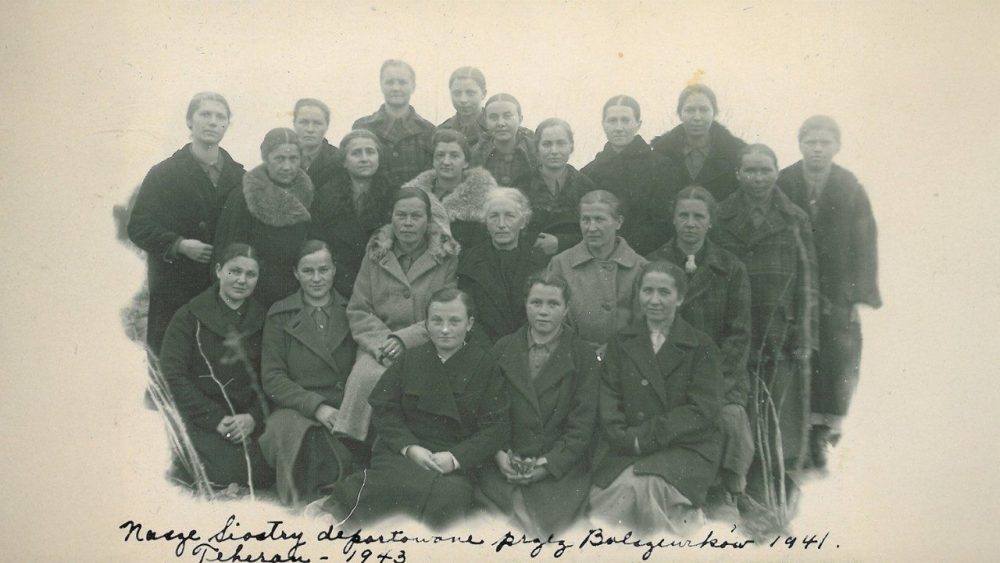
Today, we commemorate one of the darkest days in Polish history. On September 17, 1939, the Red Army, in alliance with Nazi Germany, invaded the eastern territories of the Republic of Poland, sealing the fate of the ongoing defensive war. A wave of repression began, which marked the lives of millions of citizens, recalls Sister Karolina Łuczak, spokesperson for the Congregation of the Sisters of the Holy Family of Nazareth, Warsaw Province.
In the first years of the war, between 1.2 and 1.7 million Poles were deported to Siberia, Kazakhstan, and other remote regions of the USSR. This included women, children, and consecrated persons. Between 30 and 50 percent of them did not survive due to hunger, disease, and exhaustion.
The Sisters of the Holy Family of Nazareth – the power of faith in hell
Among those deported were the Sisters of the Holy Family of Nazareth. In June 1941, at dawn, NKVD soldiers entered the convent in Vilnius. Twenty-nine sisters were taken away. They took the professed sisters, the juniors, and the novices. With small bundles in their hands, prayers on their lips, and no time to say goodbye. In cattle cars, on their way east, they renewed their religious vows, aware that they might never return.
Beyond the Urals, work beyond their strength awaited them. Logging, building roads in temperatures reaching -40°C, hunger, disease, and daily encounters with death. And yet they did not lose what was most important: faith, community, and love of neighbor. They got up an hour before reveille to pray. On their way to work, they whispered the rosary, and on the most important holidays, they secretly kept vigil in adoration. Even in the barracks of the labor camp, they renewed their vows, singing quietly in the dark.
Their superior, Mother Regina Budzyńska, kept their spirits up by arranging a prayer schedule and making sure that none of them were left alone. The sisters shared their meager portions of bread, saving the weakest among them. One of them, Sister Fidelisa Minta, died alone, giving her last pieces of bread to other exiles. Her sisters mourned her death as if they had lost a loved one.
After the amnesty was announced in 1942, most of the Sisters of the Holy Family of Nazareth set off with Anders’ Army through Central Asia. In Tehran, they took Polish orphans under their care. They treated them, fed them, and taught them, giving them not only shelter, but also hope and faith. In Africa, they established schools and orphanages, becoming true mothers to the children of war. Their daily service saved hundreds of lives.
A legacy that obliges
Today, 86 years later, the echoes of Siberia still reverberate. The war in Ukraine, fear of escalation, new forms of terror. All this reminds us how fragile freedom is. The Sisters of the Holy Family of Nazareth are still there where families and children need their help. They work with victims of war, open convents and schools for refugees, and provide assistance with the same love as their predecessors did years ago.
“September 17 reminds us that freedom and faith are not given once and for all. The history of the sisters teaches us that humanity can be saved through prayer, sacrifice, and simple presence with our neighbors, even in the most difficult conditions. Their fate obliges us not to succumb to fear, but to build a world in which goodness and hope are stronger than violence. May we never have to experience what they did,” emphasizes Sister Karolina Łuczak.
APW, Press Office of the CSFN
Source: naszdziennik.pl


